Our Partners
EAST BALI POVERTY PROJECT
East Bali Poverty Project
From Isolation to Opportunity
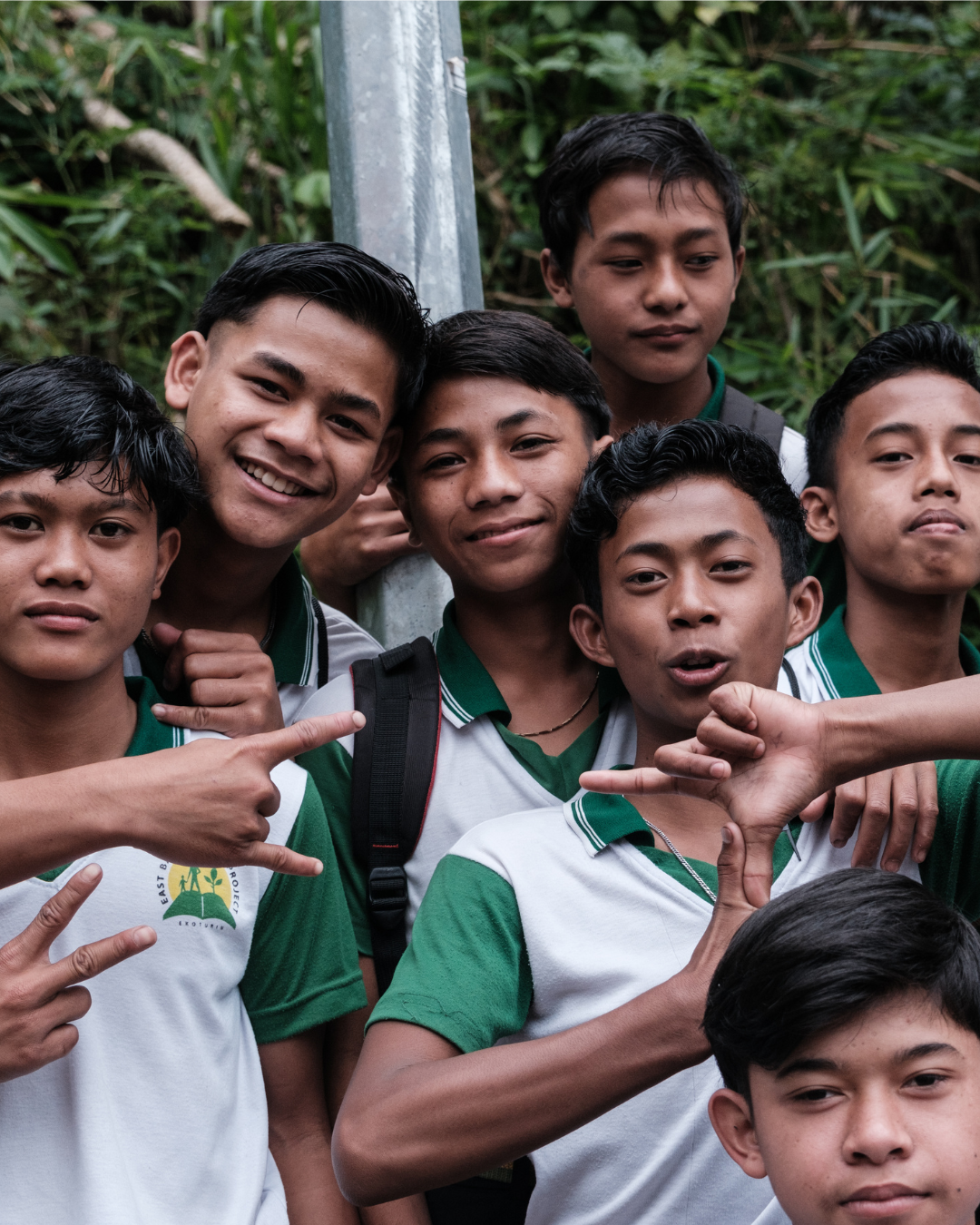
In 1998, British engineer David Booth MBE founded the East Bali Poverty Project after discovering communities living in extreme poverty in the remote mountains of East Bali.
These villages were extraordinarily isolated, both geographically and economically. There were few roads and extremely limited access to education, healthcare, clean water and sanitation. Many families lived from subsistence farming on difficult, arid land, where unpredictable weather and limited resources made everyday life a constant challenge. Children had little opportunity to receive a formal education or imagine a life beyond the circumstances into which they had been born.
For generations, isolation had meant that poverty was often passed from parents to children, not through a lack of ambition or determination, but simply because opportunities did not exist.
EBPP began by listening to the communities themselves, understanding their daily challenges and identifying what they needed most. Rather than imposing solutions from outside, the organisation sought to work alongside local families, respecting their traditions, knowledge and aspirations.
What followed was not one isolated project, but a long-term commitment to creating sustainable change, restoring dignity and opening doors that had remained closed for generations.
Over the years, EBPP has worked alongside local communities to improve access to education, healthcare, clean water, sanitation and nutrition, while developing environmental and economic programmes designed to help families become increasingly self-reliant.
Schools and educational programmes gave children access to learning, often for the very first time in their families. Water and sanitation projects improved everyday living conditions and health. Community health initiatives supported mothers and children, while sustainable agriculture and environmental programmes helped families develop new skills, protect their surroundings and explore additional sources of income.
These initiatives were deeply interconnected. A child who is healthy, properly nourished and has access to clean water is better equipped to attend school. A family with greater economic stability is more able to support its children’s education. And a community with stronger infrastructure has a better foundation on which to build its future.
Education became one of the most powerful drivers of this transformation. Children whose parents and grandparents had grown up with very limited access to schooling were suddenly learning to read, write, use computers and understand a world far beyond their mountain communities.
Classrooms became places of discovery, confidence and possibility. Education offered not only knowledge, but also the freedom to imagine a different future, one in which young people could make choices about their own lives.
But education also created a new challenge, what happens to a young person after school What happens when a bright, determined student has the ability and ambition to continue learning, but their family simply cannot afford the next step?
This is where the Shanti Foundation has chosen to concentrate an important part of its partnership with EBPP.
We believe that providing a child with an education is only the beginning. If a talented and motivated young person completes school but cannot afford university or further training, their journey can stop just as a new world is beginning to open.
For families living in remote communities, the cost of higher education represents far more than university tuition. Moving away from home, finding accommodation, paying for meals, purchasing books and travelling between university and family can create financial barriers that are simply impossible to overcome without outside support.
The Shanti Foundation therefore supports young people from EBPP communities in continuing their education through university, covering the costs that can otherwise make higher education impossible for their families.
Our commitment goes beyond paying university fees. Where necessary, support can include the practical costs surrounding education accommodation, food, books and transportation because access to university only works when a student has the means to remain there and complete their studies.
We believe that sponsorship should offer continuity, stability and reassurance. A young person beginning university should be able to concentrate on learning and developing their abilities, rather than worrying each year about whether they will have the financial means to continue. Supporting a student through the full journey is therefore just as important as helping them take the first step.
Each sponsorship represents a personal commitment to a young person’s potential, their determination and the future they are working so hard to build.
From University to Independence. Our ambition is not simply to help young people obtain a diploma. It is to help them build independent lives, meaningful careers and the confidence to make their own choices.
Over the years, we have seen young people supported through education move into professional life. Some have been employed within the Shanti Collection, while others have gone on to careers in areas such as law, tourism and hospitality, sectors offering important opportunities in Bali.
These individual journeys are particularly meaningful because they demonstrate that education can lead to tangible, lasting change.
Whenever possible, we try to create that bridge between education and employment, recognising that graduating from university is an important milestone, but entering professional life is another essential step.
A first job brings much more than a salary. It brings experience, responsibility, confidence and the ability to contribute to family life. It allows young people to become role models for younger siblings and children growing up in the same communities.
Because the real transformation happens when a young person who grew up with very limited opportunities becomes financially independent, develops a profession and is able to support themselves, their family and, eventually, their own community.
For us, this is the true measure of success: not simply the number of students supported, but the lives they are able to build afterwards.
Creating Change for the Next Generation. The work of EBPP demonstrates what long-term commitment can achieve. Communities once facing extreme isolation have gained access to education, healthcare, sanitation, clean water and new opportunities. Children who might once have had little or no access to formal education can now look towards further studies and professional careers.
These changes do not happen overnight. They are the result of years of patience, collaboration and trust between local communities and the people who believe in their future. And the impact does not stop with one student.
When one young person reaches university, graduates and finds meaningful employment, the possibilities begin to change for an entire family. Younger children see a different future. Parents see what education can make possible. Knowledge and opportunity begin to pass from one generation to the next.
A university graduate may become the first person in their family to enter a profession, but they are unlikely to be the last. Their journey can inspire brothers, sisters, cousins and neighbours to believe that higher education is also within their reach.
In this way, a single opportunity can create a ripple effect extending far beyond the individual who first received support. This is the kind of sustainable change the Shanti Foundation wants to support. We believe that meaningful philanthropy is not only about responding to immediate needs. It is also about investing in people, nurturing their potential and helping create the conditions in which future generations can thrive.
Our partnership with the East Bali Poverty Project reflects the heart of the Shanti Foundation’s philosophy. We believe in helping young people remain connected to their roots, families and communities, while giving them the education and opportunities to determine their own future.
Leaving a remote village to attend university should not mean leaving behind one’s identity or heritage. On the contrary, education can give young people the tools to honour where they come from while exploring everything they may become.
From a remote mountain school to university. From university to a first job. From a first job to independence. From independence to the confidence to support a family and contribute to a community. And, ultimately, from receiving an opportunity to being able to create opportunities for others.
This is the journey we believe in. A journey built on education, dignity, independence and the conviction that every young person deserves the chance to fulfil their potential, regardless of where they were born.
The Shanti Foundation: From Roots to Future.
TAMAN PERMATA HATI
Growing Through Education, Creativity & Joy
In the peaceful village of Nyuh Kuning, just outside Ubud, Taman Permata Hati has been creating a place of learning, belonging, hope and opportunity for Balinese children for more than three decades.
Founded by Made (Kadek) Suambara in 1995, Taman Permata Hati was established to support children who have lost one or both parents, as well as those growing up in families facing financial hardship and difficult circumstances. The present-day centre officially opened in February 2007, providing a dedicated space where children could receive educational support, guidance and encouragement.
But Taman Permata Hati is not an orphanage in the traditional sense. Whenever possible, children remain within their families and communities, coming to the centre outside school hours to learn, play and grow together.
Its philosophy is simple but deeply meaningful: children should be able to grow up surrounded by their families and cultural roots while having access to the education, care, skills and opportunities that can help them build a brighter future.
Over the years, the centre has become much more than an educational institution. It is a second home — a welcoming environment where children can learn, create, share meals, make friendships and discover their own abilities.
For many children, it is also a place of stability and reassurance, where they are encouraged to believe in themselves and where their individual talents are recognised and celebrated.
Every child arrives with a different story, but they all deserve the same opportunity: to feel supported, to be inspired and to imagine a future filled with possibilities.
Mama Ayu and a New Chapter
In 2013, Desak Nyoman Ayu Ramayani, affectionately known as Mama Ayu, joined Taman Permata Hati and began developing the educational and creative programmes that have become such an important part of daily life at the centre.
With dedication, warmth and a genuine belief in the potential of every child, Mama Ayu helped transform the centre into a lively environment where education extends far beyond traditional classroom learning.
English lessons were among her first initiatives, followed by cooking classes and an expanding programme of activities designed to give children practical knowledge, creative expression and greater confidence.
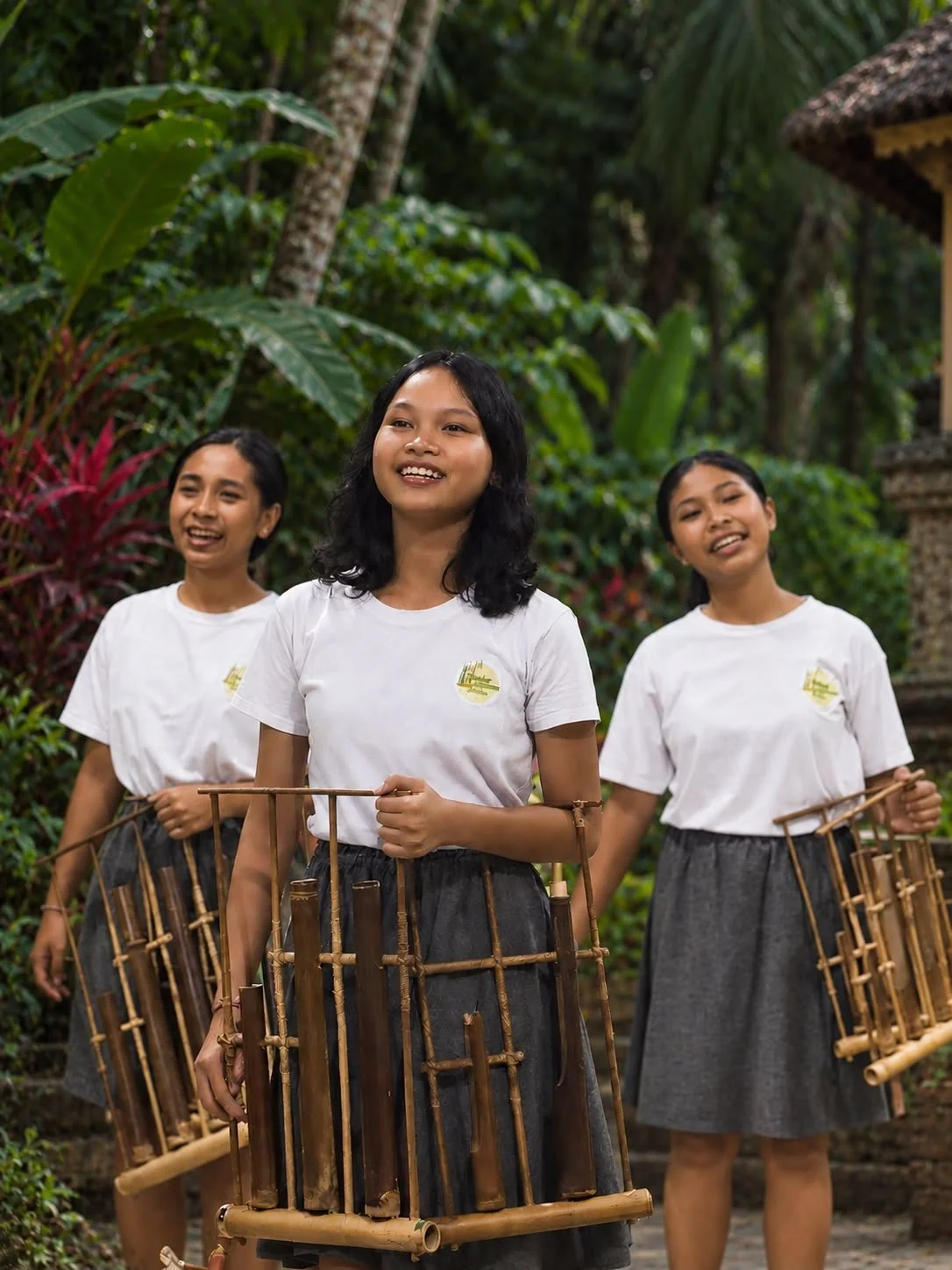
Music developed into bands and orchestras, allowing children to discover instruments, perform together and experience the joy of collective achievement. Traditional Balinese dance, art and cultural activities remained central to their education, ensuring that progress and modern learning would always remain connected to their heritage.
Today, children can explore a wide range of activities, including English, computer studies, cooking, art and drawing, traditional Balinese dance, singing, music and instruments, yoga, meditation and other creative and practical skills.
These programmes are far more than extracurricular hobbies.
They help children develop independence, discipline, teamwork, communication and self-confidence. They encourage curiosity and creativity, giving each child the freedom to discover what they enjoy and where their talents may lie.
A child who learns to play an instrument discovers patience and perseverance. A child who performs a traditional dance learns pride in their culture. A child who speaks English with confidence gains another way to connect with the wider world.
Sometimes, the smallest achievements can make the greatest difference in how a child sees their own future.
Under Mama Ayu’s guidance, Taman Permata Hati continues to nurture not only knowledge and skills, but also happiness, friendship, kindness and a strong sense of community.
What the Shanti Foundation Does
The Shanti Foundation believes deeply in this approach to education and in the importance of giving children opportunities that extend beyond formal schooling.
Over the years, working closely with Mama Ayu and the Taman Permata Hati team, our priority has been to accompany the children throughout their development, supporting their education, creativity and personal growth.
The Shanti Foundation funds the centre’s extracurricular educational programme, helping make possible activities such as English classes, computer skills, cooking, traditional Balinese dance, singing, music, art and other creative and educational programmes.
By supporting these activities and the teachers who bring them to life, we aim to provide continuity and stability, allowing children to benefit from regular learning experiences in a familiar and encouraging environment.
We believe that education is not only about passing examinations or achieving academic results.
It is about learning to communicate.
Learning to create.
Learning practical skills that may one day become a profession.
Discovering a talent that might otherwise have remained hidden.
Finding the courage to stand in front of others, express an idea, perform on a stage or simply say, “I can do this.”
It is also about understanding where you come from, appreciating your culture and becoming curious about the world beyond it.
And, just as importantly, it is about joy.
That is why our relationship with Taman Permata Hati has always included moments outside the classroom — swimming, outings, holiday activities, shared celebrations and time spent simply having fun together.
Over the years, the Foundation has followed the children’s journeys closely, witnessing their progress, celebrating their achievements and sharing important moments as they grow.
These experiences may seem simple, but they are an essential part of childhood. They create memories, strengthen friendships, encourage social confidence and give children the happiness of feeling included and valued.
For us, supporting a child is not simply about providing financial assistance. It is about being present, building lasting relationships and helping create an environment in which every child feels that someone believes in their future.
Our commitment is therefore both educational and deeply human.
We want the children to have access to opportunities that can help them become confident, independent young adults, while never losing the sense of belonging and community that makes Taman Permata Hati so special.
Rooted in Bali. Looking to the Future.
Ubud is one of Bali’s great cultural centres, surrounded by art, music, dance, craftsmanship and traditions passed down through generations.
This extraordinary cultural heritage is part of the children’s identity, and we believe it should remain an important source of pride and inspiration as they grow.
At the same time, today’s world offers possibilities that previous generations could scarcely have imagined. Languages, technology, creativity and practical skills can open doors to further education, employment and new experiences.
Our hope is to help the children of Taman Permata Hati embrace both worlds — remaining deeply connected to their Balinese roots while developing the confidence and abilities to explore new horizons.
We believe that every child, regardless of their family circumstances, deserves the opportunity to discover their potential.
Not every child will follow the same path. Some may become artists, musicians, teachers, entrepreneurs or professionals. Others may find fulfilment in different directions. What matters is that they have the freedom, encouragement and confidence to make their own choices.
Our partnership with Taman Permata Hati is therefore about much more than funding activities.
It is about accompanying children as they grow, year after year.
It is about giving them a safe place to learn, opportunities to discover who they are, and the confidence to dream about who they might become.
It is about respecting their roots while helping them build their own future.
And above all, it is about reminding every child that their circumstances do not have to define their possibilities.
Through education, creativity, culture and joy, we hope to help every child spread their wings from their roots to their future.
The Shanti Foundation: From Roots to Future.
PUSPADI BALI
Empowering Beyond Disability
A Story of Courage, Resilience and Hope
PUSPADI Bali was founded in 1999 by I Nengah Latra, affectionately known as Pak Latra, whose personal experience with disability inspired a lifelong mission to transform the lives of others.
At just 19 years old, a devastating accident left him severely burned and physically disabled. After receiving medical treatment and rehabilitation, he gradually regained the use of his arm. But this experience opened his eyes to a much greater challenge: across Bali, countless people with disabilities were living without access to rehabilitation, mobility equipment, education or employment opportunities.
Many lived in poverty, isolated from their communities and dependent on their families. Some children had never attended school, while adults often had little opportunity to work or participate in everyday life.
Determined to make a difference, Pak Latra began travelling across Bali, visiting remote villages and searching for people living with physical disabilities. He listened to their stories, understood their needs and worked to provide practical assistance.
What began with wheelchairs, prosthetic limbs and mobility aids gradually developed into PUSPADI Bali — the Centre for Empowerment of People with Disabilities.
Today, PUSPADI provides rehabilitation, prosthetics and orthotics, mobility equipment, education, vocational training, community outreach and advocacy. Its work extends beyond physical recovery to address the social and economic barriers that prevent people with disabilities from participating fully in society.
Many of its team members live with disabilities themselves, bringing personal experience, understanding and empathy to their work.
What began with one man’s determination has become a powerful example of how compassion, expertise and opportunity can transform lives.
Their Mission — Independence, Dignity and Opportunity
At the heart of PUSPADI Bali is a simple belief:
Disability should never determine a person’s future.
Providing a wheelchair or prosthetic limb can be life-changing, but mobility alone is not enough.
True empowerment means giving people the confidence, education, skills and opportunities to participate fully in society.
For a child, this may mean attending school for the first time. For a young adult, it may mean continuing their education or finding employment. For a parent, it may mean regaining the independence to work and support their family.
PUSPADI believes that every individual deserves to be recognised for their abilities and potential rather than defined by physical limitations.
Its goal is to create a more inclusive society where people with disabilities have equal access to education, employment, healthcare and community life.
Mobility is the beginning. Independence is the goal.
What PUSPADI Bali Does
Rehabilitation, Prosthetics and Mobility
One of PUSPADI’s most important areas of work is helping people regain mobility and physical independence.
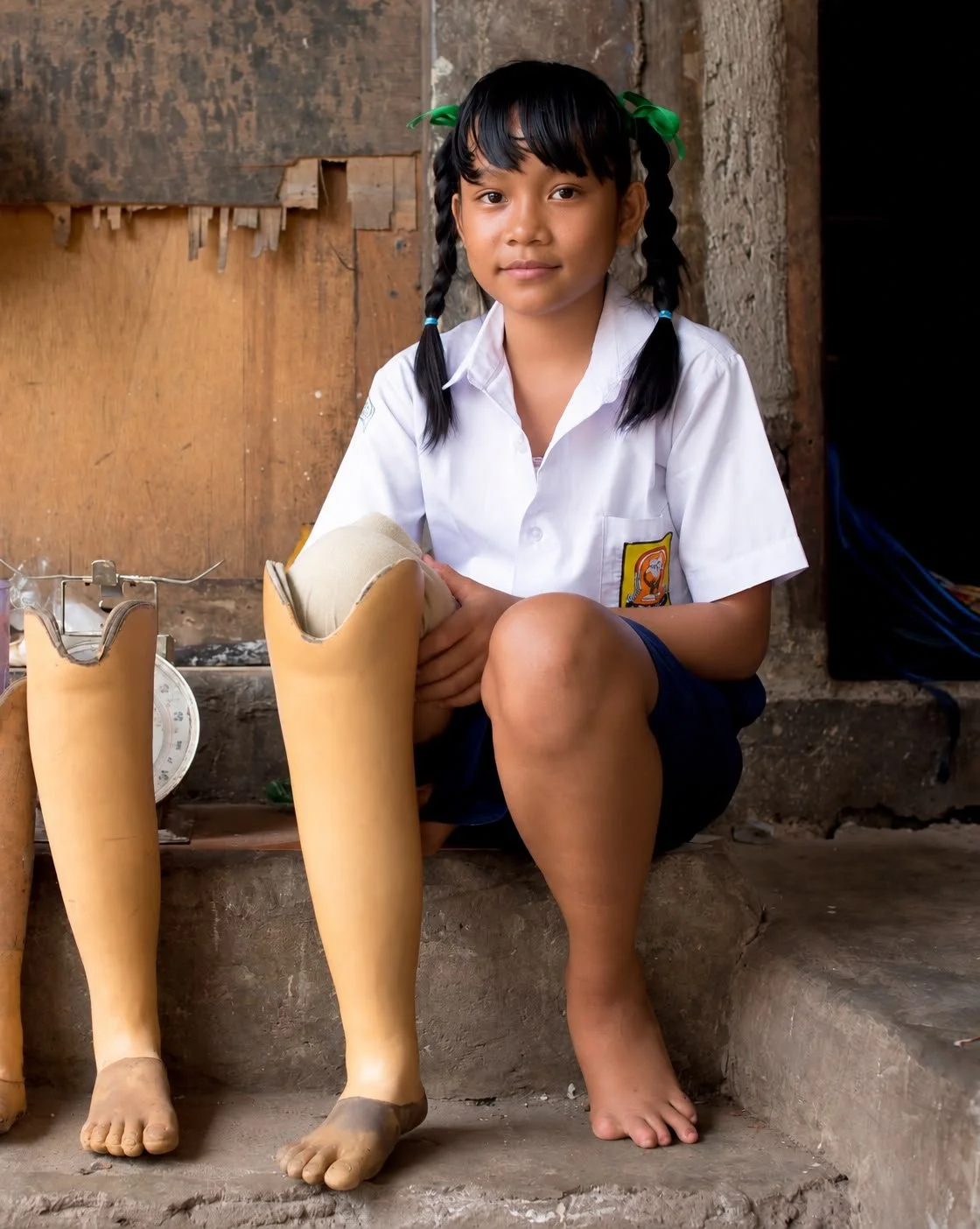
Through its rehabilitation services and specialist workshop in Denpasar, PUSPADI provides prosthetic limbs, orthotic devices, wheelchairs and other mobility aids adapted to individual needs.
These include above-knee and below-knee prosthetic legs, braces, supportive devices and specially fitted wheelchairs.
PUSPADI also provides physiotherapy, rehabilitation guidance, equipment repairs and ongoing follow-up care.
A prosthetic leg can allow someone to walk again. A wheelchair can give a child the freedom to attend school. A mobility aid can enable an adult to return to work.
These are not simply medical devices. They are tools that restore confidence, dignity and independence.
Reaching Remote Communities
Across Bali and parts of Eastern Indonesia, many people with physical disabilities live far from specialist medical and rehabilitation services.
Some families cannot afford transportation or treatment. Others may not know that assistance is available.
PUSPADI’s outreach teams travel to remote communities, visiting families, identifying individuals in need and helping them access rehabilitation and mobility equipment.
The organisation also works with families and communities to encourage greater understanding of disability and reduce social isolation.
This outreach continues the mission Pak Latra began more than two decades ago: reaching people who might otherwise remain forgotten.
Education, Training and Employment
PUSPADI understands that physical independence is only one part of a person’s journey.
Education and professional opportunities are equally essential.
Children with disabilities often face barriers to attending school, including inaccessible buildings, limited transportation and financial hardship.
PUSPADI works to help remove these obstacles and encourage access to education.
For young adults, the organisation supports vocational training, skills development and employment opportunities, helping individuals build confidence and prepare for professional life.
It also promotes disability rights, accessibility and social inclusion, encouraging communities and employers to recognise the abilities and contributions of people with disabilities.
Finding meaningful employment can transform a person’s future, providing not only income but also dignity, purpose and the opportunity to contribute to society.
What the Shanti Foundation Does
From Rehabilitation to Education
At the Shanti Foundation, we share PUSPADI Bali’s belief that everyone deserves the opportunity to build a future filled with dignity, independence and possibility.
Our involvement focuses particularly on an important stage of this journey: what happens after rehabilitation.
For young people living with physical disabilities, regaining mobility can open the door to education and independence. Yet that door may remain closed when families cannot afford university fees, accommodation, transportation or everyday living expenses.
For many, the challenge is no longer their disability, but the financial barriers standing between them and their ambitions.
This is where the Shanti Foundation hopes to make a lasting difference.
We support young people with disabilities who demonstrate the determination and ambition to pursue higher education but lack the financial resources to do so.
Our commitment goes beyond university tuition. We recognise that accommodation, food, transportation, books and essential living expenses are equally important in allowing a young person to concentrate on learning and completing their studies.
When we commit to a student’s education, our aim is to provide the stability and continuity needed to see that journey through to graduation.
Supporting Dreams and Independence
One example is Nia, a young woman who was born with one leg shorter than the other and received her first prosthetic leg through PUSPADI Bali as a child.
Despite the challenges she has faced, Nia has developed a passion for beauty and makeup. Her dream is to pursue higher education in makeup, build a professional career and eventually open her own studio or beauty salon.
The Shanti Foundation is committed to supporting her four years of university education, including essential living costs.
Nia’s journey illustrates exactly why our work matters.
PUSPADI helped her gain mobility and physical independence. Education can now help her gain professional and financial independence.
We have also seen young people with disabilities enter professional life, including careers in tourism and law, and have welcomed individuals with disabilities into our own professional environment and projects.
These experiences reinforce our belief that meaningful support should create lasting opportunities rather than temporary assistance.
Our ambition is to help young people gain qualifications, enter the workforce, support themselves and become confident, independent adults.
From Roots to Future
PUSPADI Bali began with one man’s determination to transform his own experience into an opportunity for others.
More than two decades later, that same spirit continues to inspire and change lives across Bali.
At the Shanti Foundation, we are proud to contribute to this journey by helping young people take the next step towards education, employment and independence.
We believe that the greatest gift is not simply helping someone today, but giving them the tools and opportunities to shape their own tomorrow.
For us, the journey should never stop with rehabilitation.
From mobility to education.
From education to opportunity.
From opportunity to independence.
Because everyone deserves the opportunity to learn, work, belong and dream.
From Roots to Future
Caring. Sharing. Giving.